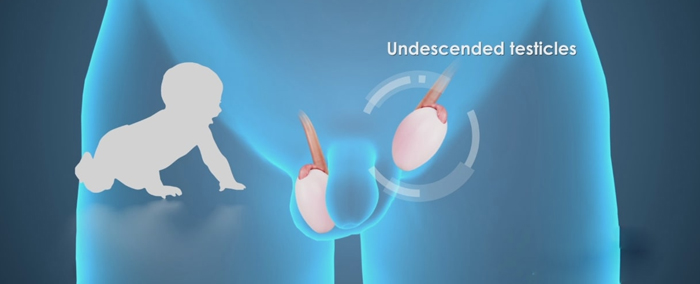
Undescended testis, medically known as cryptorchidism, is a common pediatric condition where one or both testicles fail to move into the scrotum before birth. Normally, testicles develop inside the abdomen of a male fetus and gradually descend into the scrotum before delivery. When this process is incomplete, the testis may remain in the abdomen, groin canal, or high scrotal position. The condition affects approximately 2–4% of newborn boys, with higher rates in premature babies.
The exact cause is not always known, but factors such as hormonal imbalance, genetic influences, premature birth, low birth weight, maternal health conditions, or structural abnormalities during fetal development may contribute. A testis that remains outside the scrotum is exposed to higher body temperature, which can affect its growth, function, and long-term development.
Parents or doctors usually notice an empty scrotum or asymmetry shortly after birth. The testis may sometimes be palpable in the groin, or completely non-palpable if it is located in the abdomen. Diagnosis involves a physical examination and ultrasound. In cases where the testis is not detected, an MRI or diagnostic laparoscopy may be performed.
Untreated undescended testis can lead to complications such as reduced fertility, increased risk of testicular cancer, inguinal hernias, testicular torsion, or psychological concerns during adolescence. Early treatment significantly reduces these risks.
The recommended treatment is orchiopexy, a surgical procedure to bring the testis down into the scrotum and fix it in position. This surgery is ideally performed between 6 months and 1 year of age, though earlier detection through newborn screening is essential. Performing surgery within this window helps optimize fertility potential and reduce future complications. Laparoscopic surgery is often preferred for non-palpable testes because it is minimally invasive, safe, and effective.
Post-surgery, most children recover quickly and achieve normal testicular development. Regular follow-up is required to monitor testicular size, position, and growth through childhood. If the testis is severely underdeveloped, removal may be recommended to prevent long-term risks.
With timely diagnosis and treatment, outcomes are highly favorable. Parents should seek pediatric urology evaluation as soon as an undescended testis is identified, ensuring the best chance for normal reproductive and hormonal development.