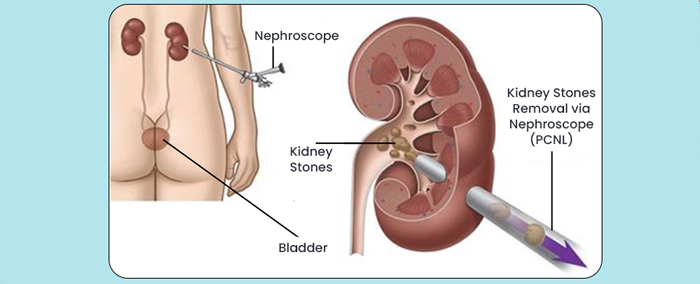
PCNL (Percutaneous Nephrolithotomy) is a highly effective surgical procedure used for removing large or complex kidney stones, typically those larger than 2 cm or when other treatments such as RIRS or URSL are not suitable. It is the gold standard treatment for big stones, staghorn stones, and stones that cause repeated infections or block the kidney’s drainage system. PCNL is performed through a small, keyhole-sized puncture made in the back, allowing direct access to the kidney.
During the procedure, the surgeon creates a tiny opening in the skin and inserts a nephroscope into the kidney. Using specialized instruments and laser or pneumatic devices, the stone is broken into smaller pieces and removed directly. This direct approach ensures a high stone-clearance rate, even for extremely hard or large stones that cannot be treated with less invasive methods.
Despite being a surgical procedure, PCNL is minimally invasive compared to open surgery. The incision is usually less than 1 cm, resulting in reduced pain, minimal blood loss, and faster recovery. PCNL can be performed under general or spinal anesthesia, depending on the patient’s condition. In complex cases, multiple tracts may be used to reach all parts of the kidney and ensure complete removal.
PCNL is recommended for patients with staghorn calculi, stones larger than 2 cm, stones causing severe swelling, or stones resistant to other treatments. It is also beneficial for patients whose kidney anatomy makes endoscopic procedures difficult. The hospital stay is typically 2–3 days, and most patients can resume normal activities within one to two weeks.
After the surgery, a nephrostomy tube or stent may be placed temporarily to help with drainage and healing. Complications are rare but may include infection, bleeding, or temporary discomfort at the puncture site. With advanced imaging, modern instruments, and experienced surgeons, PCNL has an excellent success rate and remains one of the most reliable methods for complete stone clearance.
PCNL offers a strong balance between effectiveness and safety, making it the preferred treatment for large or stubborn kidney stones.